
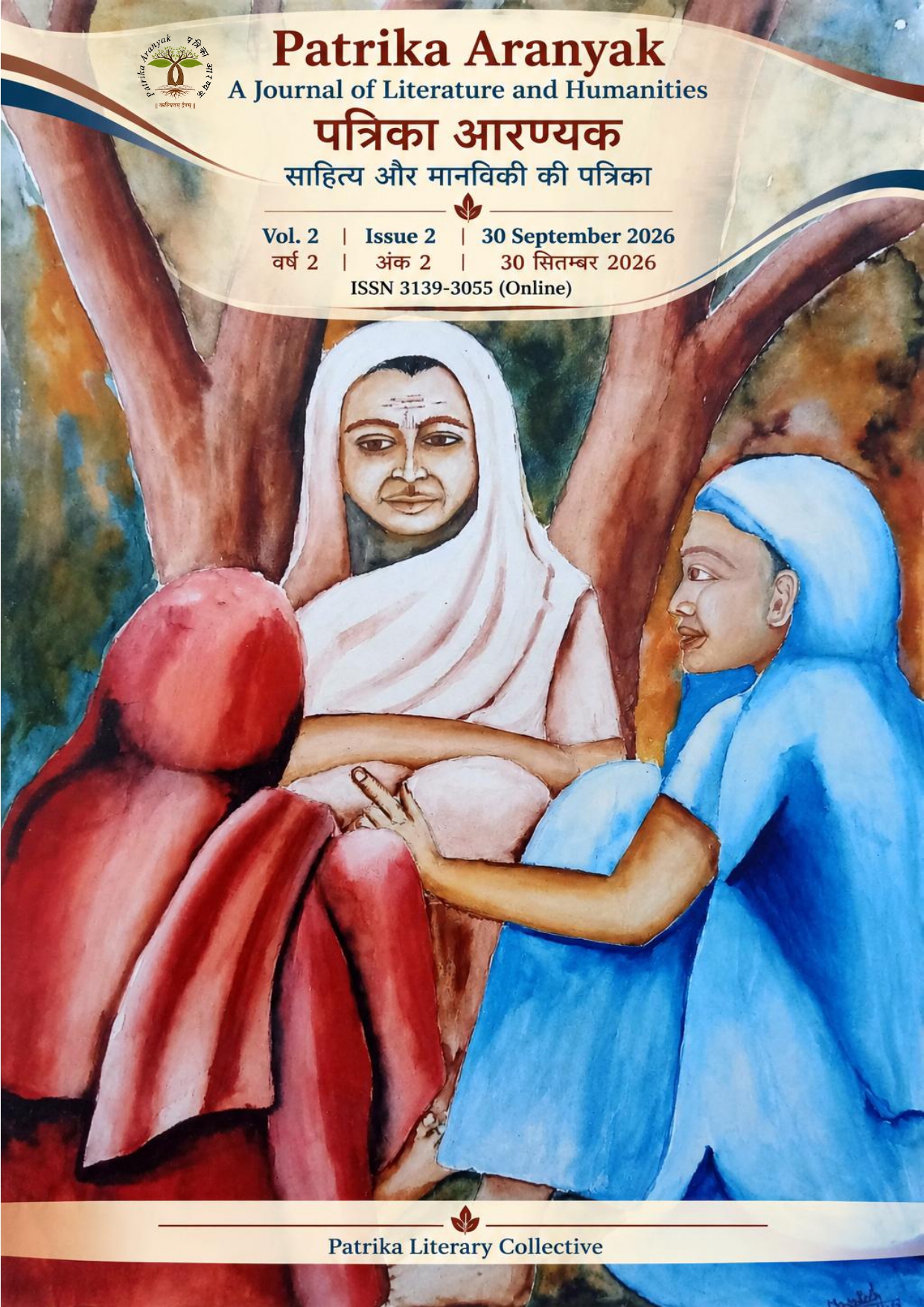
Current Issue
Volume 2 · Issue 2
Patrika Aranyak
Three, and What Lies Beyond It / तीन, और उसके पार
When we published our first two issues, we were confident about our English content; it was the Hindi that worried us. Several poems in this issue have eased that worry, and, like the silent fourth of AUM, they point to potential still unfolding. Hindi is our growing edge, and we invite you to send us your Hindi poetry, prose and essays. Three issues in, the fourth is the one not yet written.
अपने पहले दो अंक प्रकाशित करते समय हमें अंग्रेज़ी सामग्री को लेकर विश्वास था; चिंता हिन्दी की थी। इस अंक की कई कविताओं ने उस चिंता को हल्का किया है, और ॐ के मौन चतुर्थ की तरह वे उस संभावना की ओर इशारा करती हैं जो अभी खुल रही है। हिन्दी हमारी बढ़ती हुई सीमा है, और हम आपसे निवेदन करते हैं कि अपनी हिन्दी कविताएँ, गद्य और निबंध हमें भेजें। तीन अंकों के बाद, चौथा वही है जो अभी लिखा जाना शेष है।
September 2026
Bilingual
1
34
Complete Issue Index
Table of Contents
All published contents of Volume 2, Issue 2.
Research Articles
1| S.No. | Article & Author(s) | Pages | |
|---|---|---|---|
| 1 | Digital Storytelling and Queer Conversations: Social Media and Online Publishing as Sites of Negotiating Heteronormative Discourse in India Amit Rajan Singh, Vishwanath Rana | 7–14 | View / Download |
Creative Works
34| S.No. | Work & Author | Category | Pages | |
|---|---|---|---|---|
| 1 | Traces Sambhu Ramachandran | Poetry | कविता | 16 | View / Download |
| 2 | Lines Written While You Were Putting on Makeup Sambhu Ramachandran | Poetry | कविता | 17 | View / Download |
| 3 | Argument for the Existence of the Soul John Menaghan | Poetry | कविता | 18 | View / Download |
| 4 | Whereabouts John Menaghan | Poetry | कविता | 19 | View / Download |
| 5 | Tidings John Menaghan | Poetry | कविता | 20 | View / Download |
| 6 | करवट सुशांत सौरभ | Poetry | कविता | 21 | View / Download |
| 7 | तिलचट्टे और केक सुशांत सौरभ | Poetry | कविता | 22 | View / Download |
| 8 | A Bang from Kobani Michael Roque | Poetry | कविता | 23 | View / Download |
| 9 | Egg to Crack Michael Roque | Poetry | कविता | 24 | View / Download |
| 10 | The Fairytale’s Over Michael Roque | Poetry | कविता | 25 | View / Download |
| 11 | दिनचर्या अर्शिया अंजुम | Poetry | कविता | 26–27 | View / Download |
| 12 | Anthropological Debacle Thomas Piekarski | Poetry | कविता | 28–35 | View / Download |
| 13 | On A Dark Night George Freek | Poetry | कविता | 36 | View / Download |
| 14 | Night Poetry George Freek | Poetry | कविता | 37 | View / Download |
| 15 | The Facts of Life George Freek | Poetry | कविता | 38 | View / Download |
| 16 | the last sip of you Francisco Izukiri | Poetry | कविता | 39 | View / Download |
| 17 | The Only Open Eyes in the Temple Sushanth Shyamsundar | Poetry | कविता | 40 | View / Download |
| 18 | Head of the Family, Eighteen Sushanth Shyamsundar | Poetry | कविता | 41 | View / Download |
| 19 | The Delivery Rider is India’s Greatest Hero Sushanth Shyamsundar | Poetry | कविता | 42–46 | View / Download |
| 20 | The Sound of What Arrives John Brixter Tino | Poetry | कविता | 47 | View / Download |
| 21 | At the Bus Stop John Brixter Tino | Poetry | कविता | 48 | View / Download |
| 22 | We were only Bright for a Moment John Brixter Tino | Poetry | कविता | 49 | View / Download |
| 23 | Two Cups of Indian Tea— Anatoly Loginov | Poetry | कविता | 50 | View / Download |
| 24 | पीतल और सोना अमित कुमार | Poetry | कविता | 51 | View / Download |
| 25 | Blue Frights Gabriella Garofalo | Poetry | कविता | 52–55 | View / Download |
| 26 | Easier Roads Bainapalli Vishal | Poetry | कविता | 56 | View / Download |
| 27 | She Arrived by Dawn at My Gate Bainapalli Vishal | Poetry | कविता | 57 | View / Download |
| 28 | अब व्योम विमल है कविता चौधरी | Poetry | कविता | 58 | View / Download |
| 29 | I-Spy Samuel J. Smith | Fiction | कथा-साहित्य | 60–63 | View / Download |
| 30 | The Third Date Andrew Borneman | Fiction | कथा-साहित्य | 64–65 | View / Download |
| 31 | The Girl Who Died Calvin Mills | Fiction | कथा-साहित्य | 66–69 | View / Download |
| 32 | The Masculine Virtues Frank Diamond | Fiction | कथा-साहित्य | 70–80 | View / Download |
| 33 | A Child’s Journey: From Kabul’s Dreams to Survival in Pakistan Mehrullah Rahmani | Non-Fiction | कथेत्तर साहित्य | 82–83 | View / Download |
| 34 | Cave Man Pavle Radonić | Non-Fiction | कथेत्तर साहित्य | 84–86 | View / Download |
From the Editor's Desk
Editorial Note
Listen to one cycle of Teen Taal and you will hear something its name conceals. The cycle has sixteen beats, yet it is called "three claps": tālī on the first, fifth and thirteenth beats, and on the ninth a silent wave of the hand, the khālī. Three marks of sound and one of silence, and the silence sits not at the edge of the cycle but at its heart. It is the khālī that makes the return to the first beat feel like an arrival rather than a repetition.
We found ourselves thinking of this while preparing our third issue, because three has long been the number where things begin to move. The Pythagoreans, as Aristotle reports, prized it as the first number with a beginning, a middle and an end (a shape we hope our publication journey will not follow too literally). Where one is unity and two is opposition, three lets them speak to each other. Plato divides the soul into reason, spirit and appetite; Christianity confesses three persons in one essence. In Indian thought the triad is working machinery: Brahmā, Viṣṇu and Śiva as creation, preservation and dissolution; sattva, rajas and tamas as the temper of all nature; waking, dream and deep sleep as the states sounded in AUM. Buddhists take refuge in three jewels, and Jains seek liberation through right faith, knowledge and conduct. The Dao De Jing says that "Two generates Three, and Three generates the ten thousand things," a line often read as opposed forces, joined by harmonizing breath, beginning to make a world. Even the plainest physics agrees: three points are the fewest that fix a plane, which is why a three-legged stool never wobbles. Some linguists even connect the Indo-European root of "three" with one meaning "to cross over," though the link is debated.
Yet the traditions that honour the triad rarely let it close. The Māṇḍūkya Upaniṣad names three states of consciousness and then points to a fourth, turīya, which is not one more state but the silent ground of the other three. The alchemist Maria Prophetissa said the same in another idiom: "One becomes two, two becomes three, and out of the third comes the one as the fourth." Teen Taal is that intuition made audible.
This issue arrives in that spirit Pavle Radonić's wide-ranging travelogue, the pain of displacement in Mehrullah Rahmani's writing, and the poems of Francisco Izukiri and Thomas Piekarski all leave behind a pregnant silence once the reading is done. We thank all the authors who contributed to this issue, and our reviewers, who were kind enough to spare time from their busy schedules.
When we published our first two issues, we were confident about our English content; it was the Hindi that worried us. Several poems in this issue have eased that worry, and, like the silent fourth of AUM, they point to potential still unfolding. Hindi is our growing edge, and we invite you to send us your Hindi poetry, prose and essays. Three issues in, the fourth is the one not yet written.
तीन, और उसके पार
तीन ताल का एक आवर्तन ध्यान से सुनिए, तो वह बात सुनाई देती है जो उसके नाम में छिपी रहती है। ताल में सोलह मात्राएँ हैं, फिर भी उसे "तीन ताल" कहा जाता है: पहली, पाँचवीं और तेरहवीं मात्रा पर ताली, और नौवीं पर हाथ की एक मौन लहर, यानी खाली। ध्वनि के तीन चिह्न और मौन का एक, और वह मौन आवर्तन के किनारे पर नहीं, उसके हृदय में बैठा है। यह खाली ही है जो सम पर लौटने को दोहराव नहीं, आगमन का अनुभव बना देती है।
अपना तीसरा अंक तैयार करते हुए हमें यही बात याद आती रही, क्योंकि तीन सदा से वह संख्या रही है जहाँ से गति आरंभ होती है। अरस्तू के अनुसार पाइथागोरस के अनुयायियों ने इसे पहली ऐसी संख्या माना जिसमें आदि, मध्य और अंत तीनों हैं (हमारी प्रकाशन-यात्रा, आशा है, इस ढाँचे का अक्षरशः पालन नहीं करेगी)। एक एकत्व है और दो द्वंद्व; तीन वह है जो दोनों को संवाद में ले आता है। प्लेटो आत्मा को विवेक, उत्साह और कामना में बाँटते हैं; ईसाई परंपरा एक सत्ता में तीन व्यक्तियों को मानती है। भारतीय चिंतन में त्रिक एक सक्रिय तंत्र है: ब्रह्मा, विष्णु और शिव सृजन, पालन और संहार के रूप में; सत्त्व, रजस् और तमस् समस्त प्रकृति के स्वभाव के रूप में; और जाग्रत, स्वप्न और सुषुप्ति चेतना की उन अवस्थाओं के रूप में जो ॐ में ध्वनित होती हैं। बौद्ध तीन रत्नों की शरण लेते हैं, और जैन सम्यक् दर्शन, ज्ञान और चरित्र के रत्नत्रय से मोक्ष की ओर बढ़ते हैं। दाओ दे जिंग कहता है : "एक से दो उत्पन्न होता है,दो से तीन और तीन से दस हज़ार वस्तुएँ", जिसे प्रायः इस तरह पढ़ा जाता है कि परस्पर विरोधी शक्तियाँ सामंजस्य की श्वास से जुड़कर संसार रचने लगती हैं। साधारण भौतिकी भी यही कहती है: समतल को निर्धारित करने के लिए तीन बिंदु न्यूनतम हैं, इसीलिए तीन टाँगों वाला स्टूल कभी नहीं डगमगाता। कुछ भाषाविद् 'तीन' की भारोपीय धातु को 'पार जाने' के अर्थ वाली धातु से भी जोड़ते हैं, यद्यपि यह संबंध विवादित है।
फिर भी जो परंपराएँ त्रिक का सम्मान करती हैं, वे उसे शायद ही बंद रहने देती हैं। माण्डूक्य उपनिषद् चेतना की तीन अवस्थाओं का नाम लेकर एक चौथी की ओर संकेत करता है: तुरीय, जो कोई एक और अवस्था नहीं, बल्कि शेष तीनों की मौन पृष्ठभूमि है। कीमियागर मारिया प्रोफ़ेतिस्सा ने यही बात दूसरी भाषा में कही: "एक से दो बनता है, दो से तीन, और तीसरे में से वही एक चौथे के रूप में प्रकट होता है।" तीन ताल उसी अंतर्ज्ञान का श्रव्य रूप है।
यह अंक उसी भाव में आपके हाथों में है। श्री सुशांत सौरभ की कविताओं का सधा हुआ और मितव्ययी शिल्प, सुश्री अर्शिया अंजुम की कविता में घरेलू जीवन का सादगी भरा मौन विषाद, या श्री अमित कुमार की कविता में उपस्थित जड़ों से दूर होने की पीड़ा: ये रचनाएँ प्रयोगधर्मिता और पुरातन संवेदनाओं के बीच की सीमारेखा पर सफलतापूर्वक संतुलन साधती हैं। हम उन सभी रचनाकारों के आभारी हैं जिन्होंने अपनी बहुमूल्य रचनाएँ इस अंक के लिए हमें भेजीं, और उन समीक्षकों के भी, जिन्होंने अपनी व्यस्त समय-सारिणी में से कुछ समय हमें देने की कृपा की।
अपने पहले दो अंक प्रकाशित करते समय हमें अंग्रेज़ी सामग्री को लेकर विश्वास था; चिंता हिन्दी की थी। इस अंक की कई कविताओं ने उस चिंता को हल्का किया है, और ॐ के मौन चतुर्थ की तरह वे उस संभावना की ओर इशारा करती हैं जो अभी खुल रही है। हिन्दी हमारी बढ़ती हुई सीमा है, और हम आपसे निवेदन करते हैं कि अपनी हिन्दी कविताएँ, गद्य और निबंध हमें भेजें। तीन अंकों के बाद, चौथा वही है जो अभी लिखा जाना शेष है।
Chief Editor
How to Cite This Issue
Use the following citation formats when referring to this issue.
APA
Patrika Aranyak. (2026). Three, and What Lies Beyond It / तीन, और उसके पार, 2(2). https://patrikaa.com//research/issue.php?slug=volume-2-issue-2
MLA
“Three, and What Lies Beyond It / तीन, और उसके पार.” Patrika Aranyak, vol. 2, no. 2, 2026. https://patrikaa.com//research/issue.php?slug=volume-2-issue-2
Chicago
Patrika Aranyak. “Three, and What Lies Beyond It / तीन, और उसके पार.” Vol. 2, no. 2 (2026). https://patrikaa.com//research/issue.php?slug=volume-2-issue-2